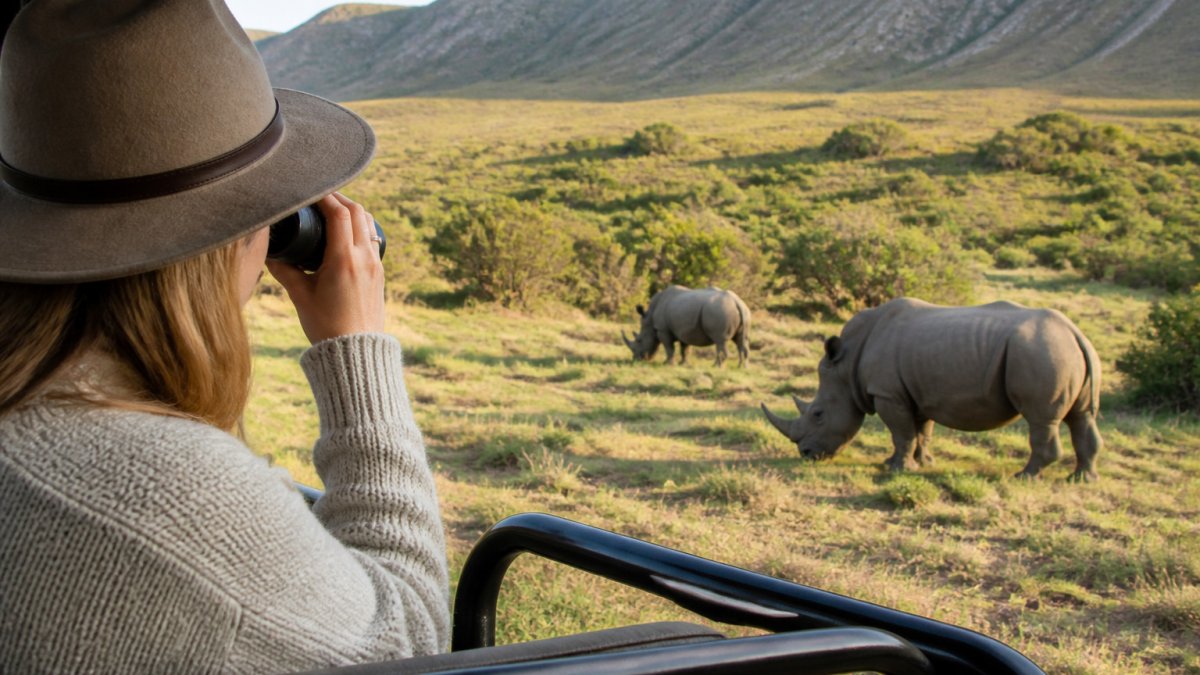
 listicle
How to Find Ethical Wildlife Experiences Near Cape Town
Last Updated: November 3, 2026
Quick Summary
An ethical wildlife experience near Cape Town keeps animals wild and free to leave, with you observing from a respectful distance rather than touching, riding, or posing with captive wildlife. Choose African penguins at Boulders Beach, southern right whales viewed from shore in Walker Bay, or a genuine rehabilitation center, and avoid elephant rides, lion walks, and cub petting.
- A genuine ethical wildlife encounter keeps animals wild: you observe, they choose whether to stay.
- Ask how many animals were released in the past year and where, because a number beats a story.
- Volunteer programs promising hands-on time with big cats, cubs, or primates are a red flag.
- Confirm the total all-in price including entry, conservation levy, guide, and equipment before paying.
- Book boat-based whale trips in advance where possible, as slots may fill fast.
Table of Contents
- What Makes a Wildlife Encounter Ethical
- How to Tell If a Wildlife Sanctuary Is Ethical
- Animal Experiences to Choose and Attractions to Avoid
- Free Ethical Wildlife Experiences Near Cape Town
- Ethical Wildlife Experiences Near Cape Town Prices and Booking
- Wildlife Sanctuary South Africa Volunteer Programs
- Plan Your Ethical Wildlife Day Trip With the Guide
- Frequently Asked Questions
What Makes a Wildlife Encounter Ethical
An ethical wildlife encounter is one where the animal's welfare, natural behavior, and habitat come before the visitor's photo or thrill. An ethical wildlife experience near Cape Town is one where the animal would not be worse off for the visitor's presence.
That standard matters because ethical wildlife experiences near Cape Town sit inside a global industry where "sanctuary" and "rescue" are marketing words, not regulated titles. The World Animal Protection guidance on wildlife tourism draws a hard line between watching animals in their natural environment and paying to touch, ride, or pose with captive wildlife.
The practical test comes down to distance and control. A genuine ethical wildlife encounter keeps animals wild: you observe, they choose whether to stay. A captive-animal attraction puts the animal on a schedule for human convenience.
How to Tell If a Wildlife Sanctuary Is Ethical
A wildlife sanctuary is ethical when it exists to serve the animals, not to entertain visitors.
Use this checklist before you book anything that calls itself a sanctuary:
- Animals have space to hide and retreat from visitors
- No touching, feeding, riding, or holding is offered
- Staff can explain where each animal came from and why it can't be released
- The facility publishes its conservation or rehabilitation purpose
- Visitors are kept at a respectful distance by design, not by request
The Conservation Africa ethical wildlife travel guide frames these as "green flags" and "red flags," and we'd add one more: ask what happens to the animals when they're no longer useful to visitors.
How to verify the claims, not just hear them
A checklist only works if you can test it. These are the verification steps most visitors skip:
- Ask for the intake record. For each animal on display, staff should be able to say where it came from, when it arrived, and why it cannot be released. A facility that cannot answer for one animal is a facility that cannot answer for any.
- Ask for the release record. Genuine rehabilitation work produces releases. Ask how many animals were released in the past year and where. A number is better than a story.
- Ask who inspects them. Look for a named veterinary practice, a welfare inspection regime, or a conservation body the facility answers to. "We love animals" is not an inspection regime.
- Watch the breeding question. Ask directly whether the facility breeds animals. If it does, ask what happens to the offspring. Predators bred for human contact cannot be released, and the cycle repeats.
- Read the job description, not the brochure. If volunteers are promised hands-on time with cubs, primates, or big cats, the welfare claim does not survive contact with the schedule.
Warning signs that survive a friendly website
- Contact sold as education. "Educational handling" is still handling.
- Breeding sold as conservation. Captive breeding that feeds a visitor experience is not conservation.
- Rescue sold as permanent display. A true rescue center releases where it can and gives lifetime care where it cannot; it does not acquire animals to fill enclosures.
- Volunteer fees that fund the facility, not the animals. Ask what share of the fee goes to animal care.
How to report a concern
Watch out: a place that lets you "volunteer" with cubs or walk with lions is almost always a breeding operation dressed up as conservation.
Animal Experiences to Choose and Attractions to Avoid
The best ethical wildlife experiences near Cape Town involve animals that are wild, free to leave, and viewed from a distance. The worst involve animals bred or trained for contact.
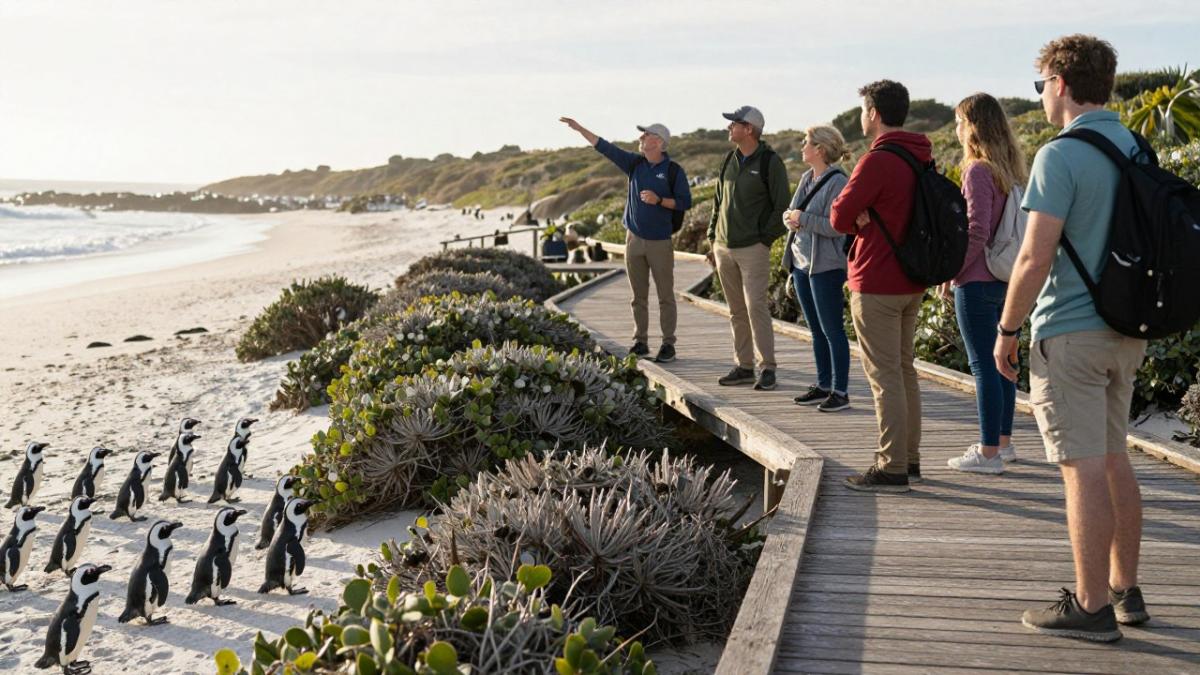
Choose these:
- African penguins at Boulders Beach. A boardwalk keeps you above the colony while the birds go about their day. Where to stand and when to go at Boulders Beach covers the viewing details.
- Southern right whales in Walker Bay. From the shore, on foot, with no boat chasing them. Whale watching in Hermanus explains when the whales are there and what it costs.
- Shorebirds and coastal wildlife on a self-guided walk, where you control the distance.
- A genuine rehabilitation center that keeps visitors behind glass and explains its release work.
Avoid these:
- Elephant rides and elephant-back safaris
- Lion walks and "walking with lions"
- Cub petting and bottle-feeding predators
- Any "petting zoo" style encounter with wild species
- Shows where animals perform on cue
These aren't ethical animal encounters. They're animal interaction sold as conservation, and the animal pays for the photo.
Here is the short version of what to seek out and what to skip.
| Experience | Choose or avoid | Why |
|---|---|---|
| African penguins at Boulders Beach | Choose | Boardwalk keeps you above the colony |
| Southern right whales in Walker Bay | Choose | Viewed from shore, no boat chasing them |
| Shorebirds and coastal wildlife | Choose | Self-guided walk, you control the distance |
| Genuine rehabilitation center | Choose | Visitors kept behind glass, release work explained |
| Elephant rides and elephant-back safaris | Avoid | Animal interaction sold as conservation |
| Lion walks and walking with lions | Avoid | Animals bred or trained for contact |
| Cub petting and bottle-feeding predators | Avoid | Animals bred for human contact |
| Petting zoo encounters and animal shows | Avoid | Wild species handled or performing on cue |
Free Ethical Wildlife Experiences Near Cape Town
You can have a real ethical wildlife experience near Cape Town without paying an entry fee. The coastline and the mountain put wild animals within reach of anyone willing to walk and watch.
Free options include coastal walks where seabirds and small wildlife are visible from the path, viewpoints over the ocean for whale season, and public beaches where penguins and other species are protected by roped-off zones.
The trade-off is unpredictability. Wild animals don't perform on schedule, and a free experience means no guide to spot things for you.
Ethical Wildlife Experiences Near Cape Town Prices and Booking
Prices for ethical wildlife experiences near Cape Town vary by operator, season, and what's included. Check current pricing directly with each operator.
At a genuine sanctuary, your entry fee funds animal care, rehabilitation, and conservation education. Ask directly where the money goes.
How the money should break down
- Conservation or reserve fee. Many coastal and reserve-based experiences bundle a separate conservation levy into the ticket. Ask whether it is included or added at the gate, because the two produce very different totals.
- Guide or ranger fee. A paid guide is not automatically unethical; the question is whether the guide is trained to keep distance and read animal behavior, or paid to get you close for a photo.
- Equipment and boat costs. Boat-based whale trips carry fuel, crew, and permit costs that shore-based viewing does not. That is a legitimate reason for the price gap, not a red flag on its own.
- Donation or sponsorship line. Genuine rehabilitation centers often list a separate donation line. Treat that as a good sign, not a hidden fee.
What to confirm before you pay
- Total price, all-in. Ask for the figure that includes entry, conservation levy, guide, and any equipment. Operators that quote a low headline and add fees at the gate are common.
- Duration. A 90-minute boardwalk visit and a half-day boat trip are different products at different prices. Confirm the time on site, not just the departure time.
- Group size. Small-group caps are a welfare signal as well as a comfort signal. Ask for the maximum number of visitors per guide.
- Cancellation and weather policy. Coastal weather changes plans fast. Know whether a cancelled boat trip is refunded, rescheduled, or converted to a shore-based alternative.
- What happens if wildlife isn't spotted. Reputable operators state this up front. A vague answer is a warning sign.
Booking mechanics
- Book boat-based whale trips in advance where possible, as slots may fill fast.
- Check whether park or reserve fees are included in any tour price before you pay.
- Confirm the cancellation policy, since coastal weather can change plans fast.
- Ask what happens if wildlife isn't spotted, so you know the terms up front.
- Pay by card where you can. It gives you a dispute path if the experience does not match what was sold.
A note on currency and tipping
Prices are typically quoted in the local currency, so budget for card fees and exchange-rate movement.
For getting to the coast without a car, our breakdown of how to get to Boulders Beach from Cape Town compares every transport option and the costs involved.
Wildlife Sanctuary South Africa Volunteer Programs
Volunteer programs at a wildlife sanctuary in South Africa can be genuine conservation work or a paid holiday with animals, and the difference is usually visible in the job description.
Real volunteer work looks unglamorous: enclosure maintenance, food preparation, data recording, alien vegetation clearing, and rehabilitation support under supervision.
Before you commit, ask:
- What specific tasks will I do, hour by hour?
- Will I have physical contact with animals? The answer should be no.
- Is this a non-profit with a stated conservation project?
- What happens to the animals I work with long-term?
If a program can't answer these clearly, walk away. Ethical animal encounters don't need to hide their methods.
Plan Your Ethical Wildlife Day Trip With the Guide
A good wildlife day near Cape Town lives or dies on timing and weather. The wind, the sea state, and the season decide whether you see whales, whether the boardwalks are crowded, and whether the drive is worth it. Day trips from Cape Town covers how far to go and how to plan the day.
Local knowledge helps with timing and conditions.
Uncover Cape Town exists for exactly this: a born Capetonian's read on where to go, when to go, and what to skip. The guide packs 45 vetted hidden gems across 8 chapters, with 33 locations pinned to a verified map so you're not guessing.
Frequently Asked Questions
Where can I see wildlife near Cape Town?
Coastal spots within a day's drive give you the easiest wildlife viewing: penguin colonies on protected beaches, southern right whales offshore during breeding season, and seabird colonies along the peninsula. Further out, private game reserves offer guided safari drives. Pick venues that keep visitors at a distance and put fees toward rescue or habitat protection, and check seasonality before you go, since whale sightings and breeding activity follow a calendar rather than your itinerary.
How can I tell whether a wildlife experience is ethical?
Ask three questions before booking. Does the venue allow hands-on contact such as cub petting or elephant rides? If yes, walk away. Can staff explain where the animals came from, and does the venue release or rehabilitate them rather than breed them for display? Finally, follow the money: ethical wildlife operations put entry fees into animal welfare, rehabilitation, and protected habitat, and they publish that spending. Vague conservation claims without detail are a red flag.
Are there free ethical wildlife experiences near Cape Town?
Yes. Public beaches, coastal paths, and viewpoints let you watch wildlife in the natural environment at no cost, as long as you keep your distance, stay on marked paths, and never feed animals. Birdwatching and whale watching from shore cost nothing beyond transport. Free does not mean unregulated: obey signage, respect closures during breeding season, and treat these areas as protected habitat, not photo props.
How much do ethical wildlife experiences near Cape Town cost?
Prices vary by operator, season, and group size, so confirm current rates directly with each venue before booking. Entry fees at sanctuaries and rescue centers are typically modest and often fund animal care and rehabilitation, while guided safari drives and multi-day reserve stays cost more. Ask what the fee covers, whether park fees are included, and how much goes toward conservation. Treat any quote as provisional until the venue confirms it in writing.
The hardest part of ethical wildlife travel isn't finding animals. It's telling a real sanctuary from a clever imitation, and timing your day so the wild stays wild. Get the guide, $19, and let a local's knowledge do the sorting for you.