 ultimate-guide
Is a Six-Day Cape Town Itinerary Enough Time?
Last Updated: October 25, 2026
Quick Summary
Six days is the right amount of time for a first visit to Cape Town, provided you group your days by geography and accept that you will not see everything. A Cape Town itinerary for six days gives you one full day on the Peninsula, one on the Winelands, two in the city bowl, and a buffer day for weather.
- Run the Cape Peninsula clockwise and start by 7:30-8:00 a.m. for a ten to eleven hour day.
- Pick one Winelands town, Stellenbosch or Franschhoek, and book two to three estate tastings maximum.
- Book Robben Island before you leave home, as it is the attraction most likely to sell out.
- Rent a car for Days 3 and 4 only, or skip it entirely with two guided day trips.
- Keep Day 6 within 20 minutes of your hotel with no timed attractions.
Table of Contents
- How Many Days to Spend in Cape Town
- Things to Do in Cape Town for Six Days
- Your Day-by-Day Cape Town Itinerary for Six Days
- A Cape Town Itinerary with Day Trips That Actually Fit
- A Cape Town Itinerary Without a Car: Transport, Parking, and Safety
- Planning for Weather, Seasons, and Realistic Travel Times
- Get the Local Version of This Cape Town Itinerary
- Frequently Asked Questions
How Many Days to Spend in Cape Town
Six days is the right amount of time for a first visit to Cape Town, provided you group your days by geography and accept that you will not see everything. A Cape Town itinerary for six days gives you one full day on the Peninsula, one on the Winelands, two in the city bowl, and a buffer day for weather. This guide from Uncover Cape Town is built around that structure.
The city sits under a mountain, ringed by two oceans, with the wine country an hour inland. Spread your days badly and you will spend half of them in traffic.
Below, we break down exactly how to spend six days, what to cut if you have less time, and how to plan around the wind and rain that decide half your schedule.
Things to Do in Cape Town for Six Days
The attractions worth building a six-day plan around fall into three zones: the mountain and city bowl, the southern peninsula, and the inland winelands. Trying to cover all three in a single day is the classic error.
Table Mountain and City Viewpoints
Table Mountain is the anchor of any six-day plan, and it is also the most weather-dependent. The cableway closes in high wind, so treat your mountain day as movable.
Other viewpoints worth the time: Signal Hill for sunset, Lion's Head for the hike, and the promenade at Sea Point for a flat, easy walk.
Bo-Kaap, District Six, and Central Cape Town
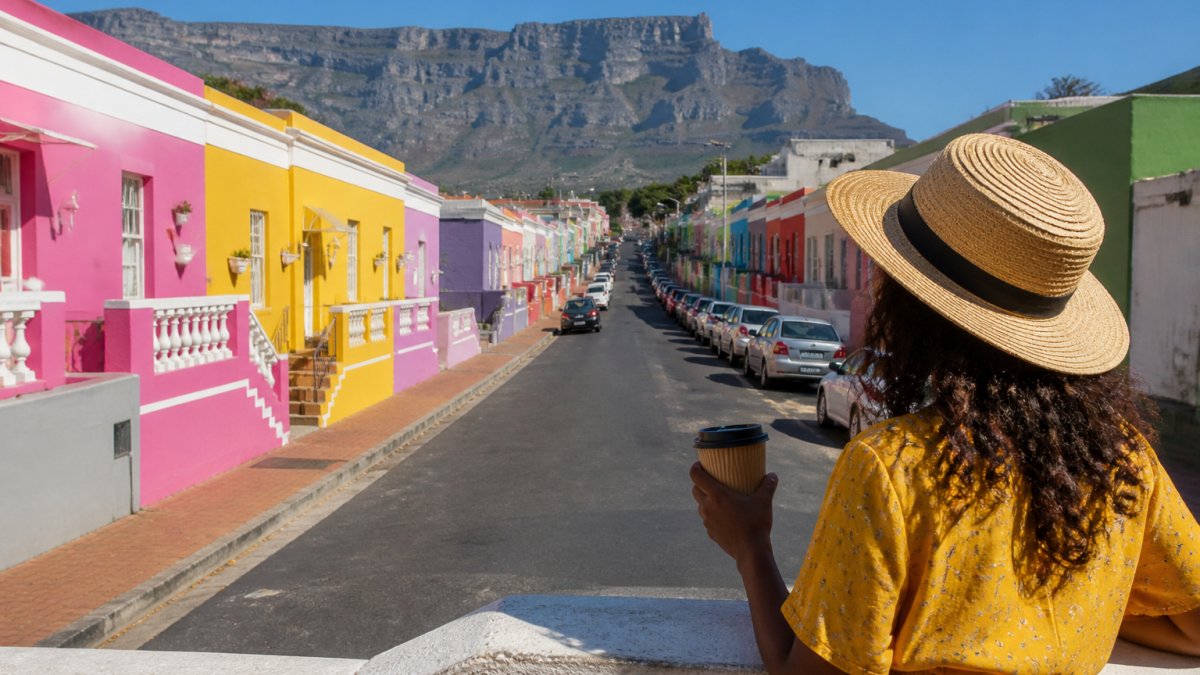
The city bowl rewards walking. Bo-Kaap's colored houses and Cape Malay food, the District Six Museum's account of forced removals, and the Company's Garden give you a half-day on foot.
A guided walking tour here is worth the money. The context is the point.
Your Day-by-Day Cape Town Itinerary for Six Days
Here is a suggested schedule. It assumes you are staying in the city bowl or Atlantic Seaboard, which keeps your morning drives short.
Day 1: Arrival and the V&A Waterfront
Keep arrival day light. The V&A Waterfront is flat, walkable, and close to most hotels, which makes it the right first stop when you are jet-lagged. Plan on two to three hours on foot: the Victoria Wharf shopping area, the harbor walk past the Cape Town Cruise Terminal, and the Time Out Market food hall if you want an easy first meal.
Booking priority: none. Buy your Table Mountain cableway ticket tonight for Day 2 only after checking the wind forecast.
Day 2: Table Mountain and the City Bowl
Start at the Table Mountain Aerial Cableway when the first car goes up (typically mid-morning, with seasonal variation, check the operator's site the night before).
After the mountain, drive or ride down to Signal Hill for the noon view, then spend the afternoon in the city bowl: Bo-Kaap's colored houses and Cape Malay food, the District Six Museum, and the Company's Garden. A guided walking tour of Bo-Kaap is worth the money, the context is the point. Balancing this urban immersion with the surrounding vineyards requires a well-structured winery tour itinerary to ensure you experience the region's viticultural heritage without feeling rushed.
Weather swap: if the cableway is closed, move the District Six Museum and Company's Garden to the morning and push the mountain to Day 5.
Drive times: city bowl to cableway lower station is roughly 10-15 minutes; cableway to Bo-Kaap is roughly 10 minutes.
Day 3: The Cape Peninsula
This is the longest driving day of the trip and the one most often underestimated.
- Chapman's Peak Drive: a toll road; budget a few minutes at the toll booth and stop at one of the designated lookout bays rather than the roadside.
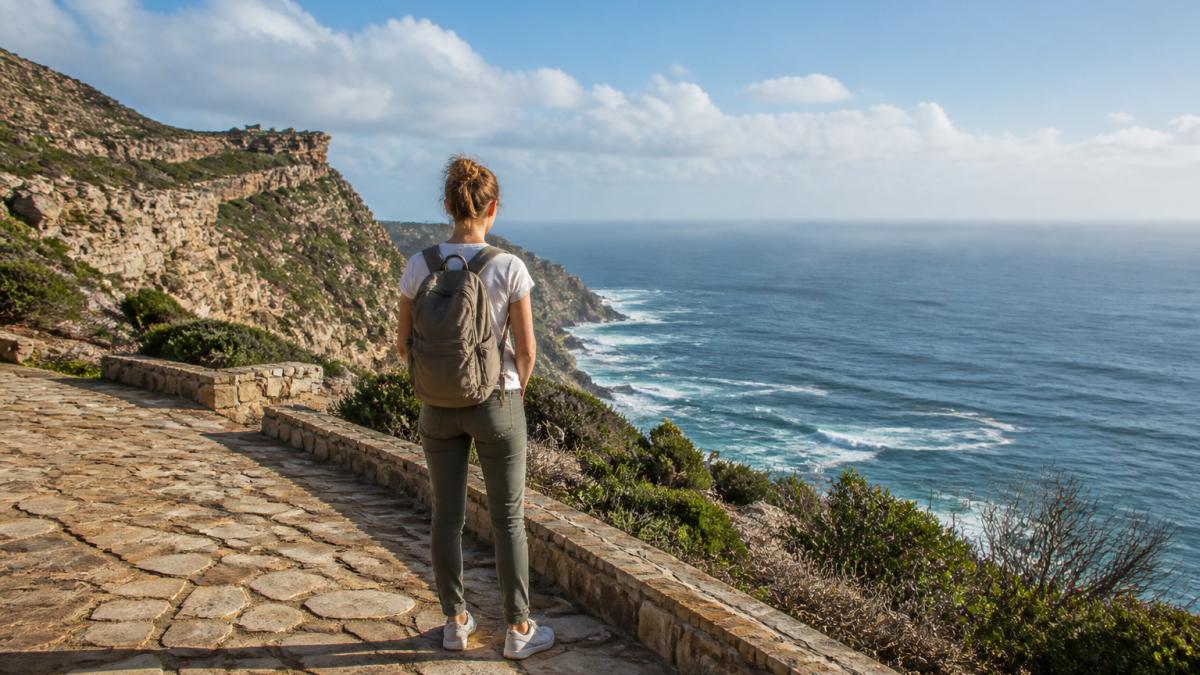
- Cape Point and Cape of Good Hope: allow two to three hours for the funicular, the lighthouse walk, and the sign at the Cape of Good Hope. The two points are not the same place, the sign most people photograph is at the Cape of Good Hope, a short drive from the Cape Point parking lot.
- Boulders Beach: the African penguin colony at Simon's Town. Go in the late afternoon when the day-trip buses have thinned; the boardwalk viewing is the reliable way to see the penguins without disturbing them.
Start by 7:30-8:00 a.m. Realistic total driving is four to five hours, with the full day running ten to eleven hours including stops.
Weather swap: in high wind or rain, Chapman's Peak Drive can close; the inland Ou Kaapse Weg route adds time but keeps the day intact.
Day 4: The Winelands
Pick one town, not both. Stellenbosch is the larger, more walkable town with a compact restaurant strip; Franschhoek is smaller, food-focused, and pairs well with the Franschhoek Wine Tram if you want to taste without driving.
Book two to three estate tastings maximum. Tastings are typically paid per person and vary by estate; reserve the popular ones a day ahead in peak season. If you are weighing the two wine towns, our guide to choosing between Stellenbosch and Franschhoek provides a comparison.
Weather swap: the Winelands is the best rainy-day outdoor option because estate tasting rooms are indoors; swap it with a city day if the forecast turns.
Day 5: Buffer, Robben Island, or a Second City Day
This is your flex day, and you should decide it on Day 4 based on what the weather has done. Three good uses:
- Robben Island, the ferry runs from the V&A Waterfront's Nelson Mandela Gateway. Crossings are weather-dependent and sell out in peak season, so book as early as your dates allow. Allow a half day.
- A second Table Mountain attempt if Day 2 was blown out.
- Kirstenbosch National Botanical Garden and the Constantia wine valley, which is the closest wine region to the city and a low-driving alternative to the Winelands.
Booking priority: Robben Island is the single attraction most likely to sell out on your dates. Book it before you leave home if your dates are fixed.
Day 6: Last Day, Close to the Hotel
Keep Day 6 within 20 minutes of your hotel. Good options: the Sea Point promenade for a flat morning walk, the V&A Waterfront for last shopping, or a return to whichever neighborhood you liked most on Day 2. If your flight is evening, a late-morning Constantia tasting works; if it is midday, do not book anything timed.
Rule of thumb: no attraction on Day 6 that you cannot walk away from in ten minutes.
Here is the six-day structure at a glance, with each day grouped by geography and its weather swap.
| Day | Plan | Weather swap |
|---|---|---|
| Day 1 | Arrival and the V&A Waterfront, two to three hours on foot | No timed attractions booked |
| Day 2 | Table Mountain cableway early, then Signal Hill and city bowl | Move District Six Museum and Company's Garden to morning, mountain to Day 5 |
| Day 3 | Cape Peninsula clockwise: Chapman's Peak, Cape Point, Boulders Beach | Ou Kaapse Weg inland route if Chapman's Peak closes |
| Day 4 | Winelands: pick Stellenbosch or Franschhoek, two to three tastings | Swap with a city day if forecast turns |
| Day 5 | Buffer: Robben Island, second mountain attempt, or Kirstenbosch and Constantia | Decided on Day 4 based on weather |
| Day 6 | Last day within 20 minutes of the hotel | No attraction you cannot walk away from in ten minutes |
A Cape Town Itinerary with Day Trips That Actually Fit
Day trips only work if the drive times are honest. The map lies about the Peninsula and the Winelands, because mountain roads and coastal traffic add real minutes.
Pick one direction per day and do not zigzag. Our guide to planning day trips from Cape Town covers drive times, who should be driving, and how the weather decides the day.
A Cape Town Itinerary Without a Car: Transport, Parking, and Safety
You can do six days without a car, but not every day. The honest split is: city bowl and Waterfront by rideshare or bus, Peninsula and Winelands by guided tour or a rental car for those two days only. Here is how each option actually behaves.
Rideshare (Uber, Bolt, and similar)
E-hailing is the default for short city hops and works well between the city bowl, Sea Point, and the Waterfront. Two practical cautions: surge pricing during commute hours and after large events at the stadium or waterfront, and sparse availability late at night in the southern suburbs. For the Peninsula, a rideshare one-way is easy; the return from Cape Point or Simon's Town can involve a long wait, so book the return before you leave the last stop or arrange a driver for the day.
Metered taxis and tour operators
For the Peninsula and Winelands, a private driver or a small-group tour is usually the lowest-stress option and often cheaper than a rental once you add fuel, tolls, and parking. Ask whether the quoted price includes the Chapman's Peak toll and the Cape Point entrance fee, those are commonly excluded.
Public bus
The city's MyCiTi bus network is clean and useful for the city bowl, Waterfront, and Atlantic Seaboard corridor. It is not a Peninsula or Winelands tool. Buy a myconnect card at a station kiosk; the card itself carries a one-time fee and you load value onto it.
Rental car
A rental car earns its keep for exactly two days on this itinerary: the Peninsula and the Winelands. Book an automatic if you are not comfortable with a manual, confirm whether the rental includes unlimited mileage, and check the toll policy, Chapman's Peak Drive is a toll road and some rentals bill tolls back to you after the fact.
Safety, in plain terms
Use the same judgment you would in any large city: keep phones out of sight on busy sidewalks, avoid unlit streets at night, and take a rideshare rather than walking back from dinner in an unfamiliar neighborhood. Trailheads on Lion's Head and Signal Hill are busiest and safest in daylight; do not leave a car at a trailhead after dark.
The transport decision, in one line
If you are staying in the city bowl and doing two guided day trips, skip the rental. If you want to stop whenever you like on the Peninsula and hit two wine estates on your own schedule, rent a car for Days 3 and 4 only. Our breakdown of getting around Cape Town without a car provides more detail on transport options and when hiring a car helps.
Planning for Weather, Seasons, and Realistic Travel Times
The wind decides your schedule more than the temperature does. The south-easter in summer closes the cableway and whips up the Atlantic seaboard, while winter brings rain and quieter streets.
Build every outdoor day with a swap. Our month-by-month guide to when to visit Cape Town provides information on wind and rain patterns so you can slot your dates. For a shorter version of this plan, see our five-day Cape Town itinerary to compare what an extra day offers.
Get the Local Version of This Cape Town Itinerary
A generic six-day plan gets you to the right neighborhoods.
That is what Uncover Cape Town is for. Our guide is written by a born Capetonian and covers 45 vetted hidden gems across eight chapters, with 33 locations carrying a verified map pin.
Get started with Uncover Cape Town and spend your six days on the city, not on the research.
Frequently Asked Questions
Is six days enough time to visit Cape Town?
Six days is enough to see Cape Town's headline sights without rushing. You can climb Table Mountain, walk Bo-Kaap and the city center, drive the Cape Peninsula to Cape Point and Boulders Beach, and still fit in a Winelands day. The trick is grouping each day by geography so you are not crossing the city twice. If you want two full Winelands days or a Garden Route add-on, seven to ten days gives you room to slow down.
How should I plan a six-day Cape Town itinerary?
Build it around geography, not a checklist. Keep your first day light near your hotel and the V&A Waterfront. Pair Table Mountain with the city center and Bo-Kaap on one day. Give the Cape Peninsula its own full day because the drive to Cape Point and back takes most of it. Use another day for Stellenbosch or Franschhoek, and keep one day flexible for weather or a repeat visit. That structure is the backbone of any workable Cape Town itinerary.
Do I need a car for a six-day trip to Cape Town?
Not necessarily. The city center, V&A Waterfront, and Bo-Kaap are easy on foot or with rideshares. For the Cape Peninsula and Winelands, you can join a small-group guided tour or hire a driver, which removes parking and navigation stress. A Cape Town itinerary without a car works well if you book those two days as tours and use the hop-on hop-off bus or rideshares for the rest. Driving yourself gives more flexibility but adds traffic and parking decisions.
Can I visit Table Mountain and the Cape Peninsula in the same itinerary?
Yes, but not on the same day. Table Mountain deserves a morning of its own because cableway queues and cloud cover can eat hours. The Cape Peninsula is a full-day loop: Muizenberg, Chapman's Peak Drive, Cape Point, and Boulders Beach. Trying to combine them means rushing both. Put Table Mountain on a city day and give the peninsula a separate day, then use a backup morning later in the trip if the mountain is clouded over.
How much time should I allow for a Cape Town day trip?
Plan a full day for any trip outside the city. Cape Point and Boulders Beach take seven to eight hours once you include the scenic drive and stops. Stellenbosch or Franschhoek needs a similar block, especially if you join a wine tram or tastings. Cape Town day trips work best when you leave by 8 a.m. and accept that you will be back in the evening. Half-day attempts usually mean more time in traffic than at the destination.